THE HISTORICAL CONTEXT OF ENERGY
In the Palaeolithic era, light was graciously sought for and was eventually obtained through modernity. Light has been a prerequisite for socio-economic growth and technological development since the creation of the universe. Most developed and developing economies of the world invest heavily in energy sources to drive their socio-economic activities. Advanced economies took years to develop economic power through strategic energy sourcing.
The world, in a bid to enjoy uninterrupted power supply, has invented diverse energy sources. These began with geothermal energy, first used by North Americans about 10,000 years ago, and hydro energy, discovered in 1829 by Allan Pelton. Coal energy served as man’s earliest source of heat and light 3,000 years ago, with the first commercial mining beginning in Richmond, Virginia, in 1748.
In a bid to expand energy usage, the Egyptians discovered windmill energy in 5,000 BC to empower sailing boats, pump water, and grind grain. The discovery of crude oil and gas in the 19th century gave credence to modernity in global socio-economic advancement. This has been coupled with 21st-century discoveries in solar energy, inverter technology, and even ongoing research into urine as an energy source. Countries continue to research cheap, clean, and affordable energy for their citizens.
THE AFRICAN PARADOX: PLENTY AMIDST POVERTY
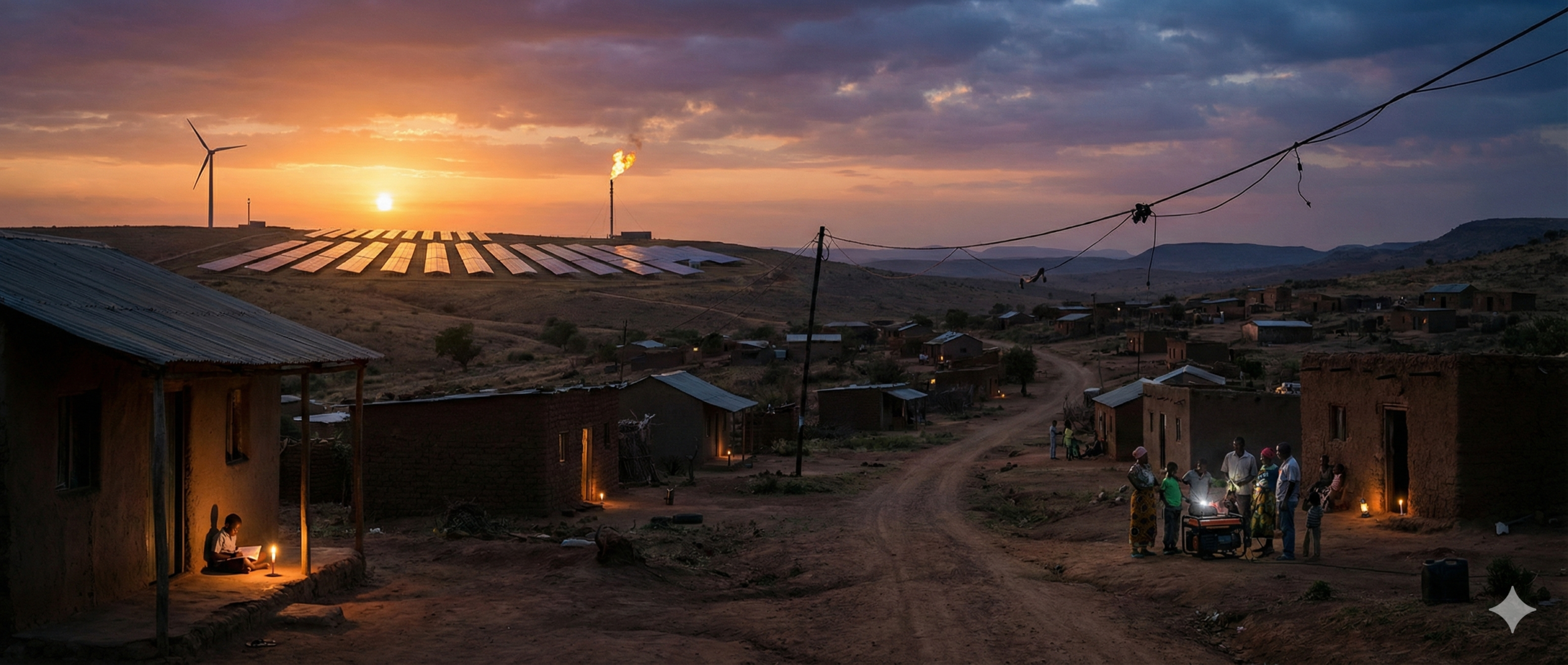
In spite of these global advancements, many African states have deliberately refused to find lasting solutions to their epileptic energy challenges. Most prominent is the black African race, which is surrounded by an abundance of natural energy sources yet often remains in darkness. It is a paradoxical irony to suffer in the midst of plenty due to ignorance, self-centeredness, corruption, greed, and the quest for control by the elite over a helpless proletariat.
There is an argument that overpopulation caused Africa to be underdeveloped. I dispute this assumption. China and India are the most populous countries in the world, yet they are developed nations within the Asian continent. Overpopulation is only a challenge when there are no planned equilibrium resources for both human and material development.
While some African countries like Egypt, Libya, Algeria, Morocco, and South Africa have made strides in their energy mix, many others remain relegated. The Nigerian economy, for instance, has become a “generator plant economy.” In this situation, alternative generators become the major source of energy while the national grid becomes a mere antiquity, contributing nothing to economic growth.
COLONIAL LEGACY AND THE SEARCH FOR VALUE
Erroneously, we seem to put all blame on our colonial past. We forget that freedom is a choice and development is the challenge that heralds that freedom. We are at liberty to break away from colonial methodologies, just as the Americans did. After being colonized by the British, Americans channeled a new value system, creating their own social order, academic curriculum, military structure, and foreign policy embellished with American ideas.
Nigeria is over five decades post-independence, yet it has not found its bearing in energy and power. Huge untapped human and mineral resources exist that could equate the nation to global equity, but a lack of leadership in harnessing this wealth has kept the nation underdeveloped. While Nigerians in the diaspora prove their capability abroad, the home front is often governed by those who fail to promote the bills necessary for an erudite society.
SABOTAGE AND POLICY CONSTRAINTS
Energy is the fundamental bedrock upon which technological development, industries, agriculture, and education evolve. The presence of light indicates wealth, prosperity, and civilization. As long as a nation remains in darkness, development is unlikely to arrive, and the downward impact triggers various forms of social vice.
While the government maintains policies on the importation of generating plants, the system continues to struggle at the expense of the domestic economy. A few interests flooding the economy with generators cause significant capital flight. There is a strong elitist conspiracy involving installation vandalism and policy sabotage against power sector reforms. These elites use the downtrodden as “foot soldiers” for vandalism due to survival instincts and poverty. They tear down the potentials of the country without recourse to the negative impact on future generations.
CONCLUSION AND RECOMMENDATIONS
To resolve these challenges, the Nigerian government should decentralize energy sourcing to the States and the six geopolitical zones rather than relying solely on a centralized national grid. This would allow states to develop without energy policy encumbrance. The world economy is driven by investment and entrepreneurship; Nigeria must follow suit to resolve its energy mix problems.
As a matter of policy urgency, the government must develop alternative energy sources from the country’s abundant natural resources. This must be done in line with our diversities and devoid of sentiment, putting the interest of the citizenry first. Darkness is evil and unnecessary, while light is a compulsory tool for development. My earnest desire is to see Nigeria shine as a light to the African continent and the world at large.