INTRODUCTION
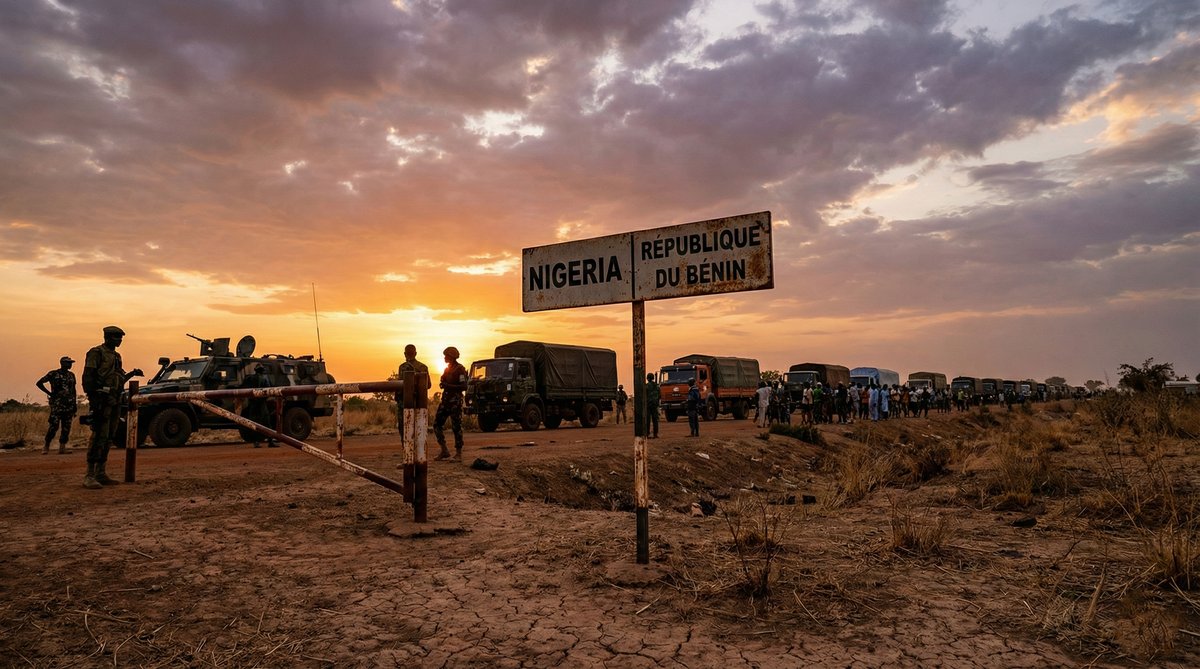
Bakassi is a peninsula on the Gulf of Guinea, lying between the Cross River estuary near the city of Calabar and the Rio del Rey estuary on the east. It is currently governed by Cameroon following the transfer of sovereignty from neighbouring Nigeria as a result of a judgment by the International Court of Justice (ICJ). While the Nigerian Senate initially rejected the transfer in 2007, citing inconsistencies with the 1999 Constitution, the territory was completely ceded to Cameroon on August 14, 2008.
Territorial claims, ideology, colonialism, nationalism, and natural resources have traditionally been the main sources of conflict worldwide. In Africa, struggles for the control of valuable natural resources have remained a persistent feature of international affairs. These situations typically take the form of disputes over oil-laden border areas or factional struggles among leaders over mineral zones.
Historical Background
During the “Scramble for Africa,” Queen Victoria signed a Treaty of Protection with the King and Chiefs of Akwa Akpa (Old Calabar) on September 10, 1884. This enabled the British Empire to exercise control over the territory around Calabar, including Bakassi. While the territory became a de facto part of Nigeria, the border was never permanently delineated. Anglo-German agreements from the colonial era provided the legal basis for Cameroon’s eventual claim. When Southern Cameroons voted in 1961 to leave Nigeria and join Cameroon, Bakassi remained under Calabar administration until the ICJ judgment of 2002.
THE TERRITORIAL DISPUTE
Nigeria and Cameroon disputed the possession of Bakassi for decades, leading to significant military tension. In 1981, the two countries went to the brink of war over Bakassi and the Lake Chad region. Following further armed clashes in the early 1990s, Cameroon took the matter to the ICJ on March 29, 1994.
The case was extremely complex, requiring a review of diplomatic exchanges dating back over a century. Nigeria relied on the 1884 Treaty of Protection and 1885 Anglo-German correspondence. Cameroon, conversely, pointed to the Anglo-German treaty of 1913 and maritime boundary agreements signed in the 1970s, specifically the Yaoundé II Declaration (1971) and the Maroua Declaration (1975). Although Nigeria never ratified the latter, Cameroon regarded it as being in force.
THE ICJ VERDICT AND GREEN-TREE AGREEMENT
On October 10, 2002, the ICJ delivered its judgment, finding that sovereignty over Bakassi belonged to Cameroon based primarily on the 1913 Anglo-German agreements. The Court instructed Nigeria to withdraw its administration and military forces but did not require the inhabitants to move or change their nationality. Cameroon was mandated to protect the rights and welfare of the substantial Nigerian population remaining in the territory.
The verdict caused consternation in Nigeria. Legal experts described the decision as a mix of international law and international politics, while local media labelled it an “international conspiracy” against Nigerian territorial integrity. Under the mediation of UN Secretary-General Kofi Annan, the Green-tree Agreement was reached on June 12, 2006. President Olusegun Obasanjo agreed to a phased withdrawal of Nigerian troops, which was completed in August 2008.
Resettlement and Insurgency
The displacement of Bakassi inhabitants led to significant social friction. Fishermen were initially moved to a landlocked area called “New Bakassi,” which they found unsuitable for their trade. They eventually established a new community called Dayspring. Despite the formal handover, the 1999 Constitution of Nigeria still reflects Bakassi as one of the 774 local governments. In recent years, groups like the Biafra Nations League (BNL) have maintained a low-level militant resistance against Cameroonian forces in the region.
THEORETICAL FRAMEWORK: REALISM
The conflict can be understood through the lens of Realism. Realist theory prioritizes national interest and security over ethics. Proponents like Thomas Hobbes argue that political struggle is inevitable because of the human urge to dominate. In this case, the security-strategic and economic value of the peninsula drove the Nigerian government to maintain a military presence to protect its interests, disregarding colonial-era treaties until international pressure necessitated a diplomatic resolution.
DOMINANT CAUSES OF THE CONFLICT
- Geographical Position: Bakassi covers 826 square kilometres of fertile fishing grounds and potential oil reserves at the extreme eastern end of the Gulf of Guinea.
- Demographic Issues: The high concentration of Efik-Oron people in the area led Nigeria to argue for ownership based on exclusive habitation. Cameroon viewed this as a dangerous precedent for “Nigerianization” of neighbouring territories.
- Historical Errors: In 1971, General Gowon and President Ahidjo attempted to define a navigable channel for the Akpa-Yafe River. Due to faulty technical advice, the line drawn did not follow the true channel, creating a legal loophole that benefited Cameroon.
CONCLUSION AND RECOMMENDATIONS
The amicable settlement of the Bakassi dispute serves as a model for conflict resolution in Africa, demonstrating that territorial disputes can be resolved without large-scale bloodshed. However, the neglect of border communities remains a significant risk factor for future incursions.
Recommendations for Strengthening Relations:
- Infrastructure Development: Both governments should invest in schools, hospitals, and roads in border areas to guarantee sustainable peace.
- Diplomatic Fidelity: Nigeria and Cameroon must strictly abide by existing diplomatic notes and agreements.
- Resettlement Support: Prompt action must be taken to ensure the welfare and rights of displaced populations are protected.
- Mixed Commission: The Nigeria-Cameroon Mixed Commission should be maintained as a permanent structure to resolve ongoing management concerns in the disputed areas.
BIBLIOGRAPHY
- Adekanye, B. J. (2007). Linking Conflict Diagnosis, Conflict Prevention, and Conflict Management in Contemporary Africa. Lagos: Ababa Press Ltd.
- Ajayi, F. (2002). Bakassi Peninsula – Another Report Card of Military Misrule.
- Anekwe, C. M. (2002). ICJ Ruling on Bakassi: Matters Arising.
- Beseng, U. M. (2009). From Conflict Over Natural Resources to Cooperation in Bakassi Peninsula.
- Ikome, F. N. (2004). The Inviolability of Africa’s Colonial Boundaries. Johannesburg: Institute for Global Dialogue.
- Omoigui, N. (2006). The Bakassi Story.