Abstract
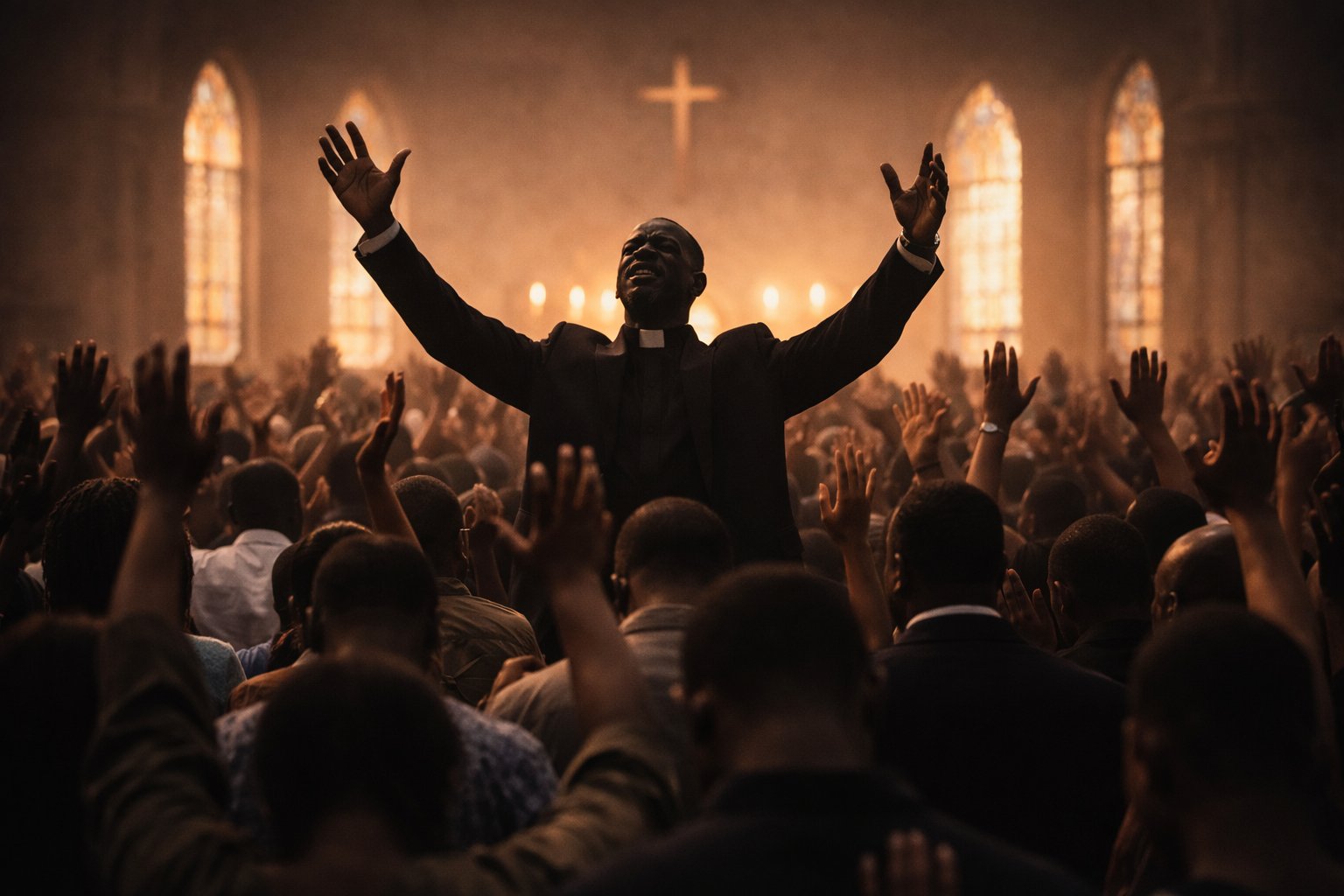
This study focuses on a controversial context within the body of Christ: Deliverance as a necessity for Church Growth. Using the Mountain of Fire and Miracles Ministries (MFM), Kubwa North Central Region 5, Abuja, as a case study, the research explores the validity of deliverance ministry in contemporary Christendom. The work is subdivided into five chapters, covering biblical perspectives, literature reviews, research findings, and strategic recommendations for implementing deliverance as a catalyst for spiritual and numerical growth.
CHAPTER ONE: INTRODUCTION
1.0. Overview
This chapter provides an overview of the generality of the theme of this research work and its methodology. The intent is to reach a logical conclusion that postulates the validity of deliverance ministry and its spiritual benefits in our contending Christendom. The study examines relevant existing literature, biblical and theological perspectives, and the role of deliverance in both the Old and New Testaments.
1.1. Background of the Study
We live in a day when many ministers claim that God has called them to preach only a specific part of the gospel. However, we have been called to preach the “WHOLE COUNSEL” of God (Acts 20:27), be it Salvation, Sanctification, Baptism of the Holy Ghost, Prosperity, Faith, or Deliverance. We must remain balanced. While demons are behind many problems, we must use discernment and avoid “witch hunting,” instead applying the deliverance principles of Christ to help the needy.
The ministry of deliverance is simply the process of casting out demons from a person or a thing. Jesus came to “set the captives free” (1 John 3:8). Because many churches have neglected to teach about the Dark Kingdom, many Christians who have the right to be free are still held captive. This need gave rise to the emergence of Mountain of Fire and Miracles Ministries (MFM) in 1989, founded by Dr. Daniel Kolawole Olukoya.
MFM is committed to the “Revival of Apostolic Signs, Holy Ghost fireworks, and the unlimited demonstration of the power of God to deliver to the uttermost.” It has since become one of the fastest-growing deliverance ministries globally.
1.2. Statement of the Problem
Before the late 80s and early 90s, the revival move for deliverance ministry was not pronounced globally. The church has often relegated the importance of deliverance to the background while enthroning commodity-fetishism and showmanship. This study intends to resolve the impact of deliverance on church growth and define the role of the deliverance minister.
1.3. Purpose of Study
Christ commissioned His disciples to manifest signs and wonders (Mark 16:17-18). The purpose of this study is to proffer a proper strategy that will energize the 21st-century deliverance ministry move, triggering revival across Nigeria and the world for the enlargement of heaven.
1.4. Objectives of the Study
- To determine the importance of deliverance in church growth.
- To ascertain various methods of deliverance.
- To determine the efficacy of deliverance in MFM.
- To recommend the best methodology in solving demonic problems.
1.5. Scope and Limitations
The scope is limited to the MFM Kubwa Church. Limitations encountered include the short time frame for data procurement (a few months) and financial constraints militating against an even more elaborate work.
1.6. Research Questions and Propositions
Empirical questions include: What is deliverance? What is the biblical position on it? Is it a catalyst for church development? Our propositions suggest that deliverance ministry is a potent tool against the devil and a fundamental principle for a “real” church.
CHAPTER TWO: LITERATURE REVIEW
2.0. Introduction to Perspectives
Opinions remain divided within the body of Christ over the place of “Deliverance.” While some brand it heretical, the Lord Jesus Himself taught it as a key component of His ministry. The 1st-century Church embraced the spiritual realm as the norm. Deliverance was not mentioned much in apostolic writings precisely because it was something they understood and performed well.
2.1. Orthodox and Presbyterian Views
Scholars like Eric Gondwe (2013) suggest that deliverance occurs when an individual has a true encounter with God’s word—the truth sets us free. Tony Evans (2014) argues that deliverance originated from Christ’s legal rights over demons and focuses on tearing down spiritual strongholds and soul ties. Tim Searles (2013) defines it as the removal of spiritual oppression through prayer and counseling.
2.2. Pentecostal Schools of Thought
Bill Banks (2014) posits that anyone under spiritual manipulation needs deliverance to serve the Lord freely. Frank Hammond (2013) explains the operations of demons and patterns ministry after Jesus. Legendary teacher Derek Prince (2011) examines deliverance as “Spiritual Warfare,” noting that we are in a war whether we know it or not. Daniel Olukoya (2004) famously stated that “any church that does not imbibe the anointing of deliverance has the devil to contend with.”
2.3. Direct Confrontation with Demons
There is a debate regarding dialoguing with demons. While some follow the Gadara precedent (Mark 5), others, like Ellen White, warn that “our only surety is in giving no place to the devil.” It is generally agreed that direct, authoritative commands in the name of Jesus are the scriptural pattern, rather than protracted, wearying dialogues.
CHAPTER THREE: BIBLICAL THEOLOGICAL PERSPECTIVE
3.1. Old Testament (Early Church) Evidence
Deliverance activities are found throughout the Old Testament:
- Satan speaking through the serpent (Genesis 3).
- A “lying spirit” in the mouth of Ahab’s prophets (1 Kings 22).
- The Exodus movement from Egyptian slavery (Exodus 12).
- Prophet Elijah’s battle at Mount Carmel against the prophets of Baal (1 Kings 18).
3.2. New Testament Foundation
There are over 100 references to demonic activity in the New Testament. Jesus placed His claims to Messiahship partly on His ability to cast out demons (Matthew 12:28). He gave His disciples authority to do the same (Matthew 10:1). The essence of the gospel is the proclamation of liberty from the bondage of sin and Satan through the blood of Christ (Hebrews 2:14-15).
3.3. Nature and Activities of Demons
Demons are spirit beings, highly intelligent, and wicked. Their activities include opposing God’s purpose, breaking up Christian marriages, and promoting immorality. The Bible mentions specific spirits such as the spirit of fear, heaviness, jealousy, and infirmity.
3.4. Preparation for Deliverance
The deliverance minister must be born again, live in holiness, and have a sound relationship with Jesus Christ. The location for prayer should be a safe environment. Procedures in MFM often involve “Mass Deliverance,” confessions of sins, renunciation of occultic involvements, and breaking ancestral curses.
CHAPTER FOUR: RESEARCH FINDINGS
4.0. Results Presentation
The research addressed several foundational questions:
- Who is God? The Creator who wants to be our Father (Ephesians 1:5).
- Who is Satan? A fallen cherub who perverted his power (Ezekiel 28).
- What is Deliverance? Total freedom from satanic oppression (Luke 4:18).
- Is it a Catalyst? Yes. Effective evangelism includes getting Satan’s hand off people’s minds so the light of the gospel can shine.
4.1. Types of Deliverance
The most important type is “Inner Healing.” Demons often attach themselves to emotional wounds. If a person cannot forgive, has self-hatred, or is passive-aggressive, they likely need inner healing as the first step to total deliverance.
CHAPTER FIVE: SUMMARY, FINDINGS, AND CONCLUSION
5.0. Summary of Spiritual Warfare
Spiritual warfare is a reality (Ephesians 6:10-18). Victory is ours because “greater is He that is in you than he that is in the world” (1 John 4:4). We must resist the devil, standing firm in faith. Deliverance is serious business; not everyone is anointed for the task, but God chooses whom He desires to carry out this awesome work.
5.1. Major Findings
There is no single “ritual” for deliverance in the Bible; it is performed by the leading of the Holy Spirit. However, long protracted prayer seasons are not found in scripture; demons usually left after a brief, authoritative command. Personal preparation, including self-examination for sin, is vital before engaging in this ministry.
5.2. Final Conclusion
The key to victory is being filled with the Holy Spirit moment by moment. MFM’s 24 years of impact have exposed demonic workings and proved that Christianity is about Grace, Faith, Healing, Salvation, and Deliverance. A ministry that lacks these may struggle against the principalities prevailing in the world today. We must put on the “whole armor of God” to stand against the wiles of the devil, using the most powerful weapon: the Word of God.
BIBLIOGRAPHY
- Olukoya, Daniel (2004). Deliverance Minister’s Manual. MFM Press, Lagos, Nigeria.
- Prince, Derek (2013). Rules of Engagement. Impact Christian Books, New York.
- White, Ellen (1970). Demon Possession and the Christian. Crossway Books.
- Hammond, Frank (2013). Pigs in the Parlor. Impact Christian Books.
- Prince, Derek (2014). Pulling Down Strongholds. Impact Christian Books.
- Sandford, John Loren (2008). Deliverance and Inner Healing. Chosen Books.