Abstract
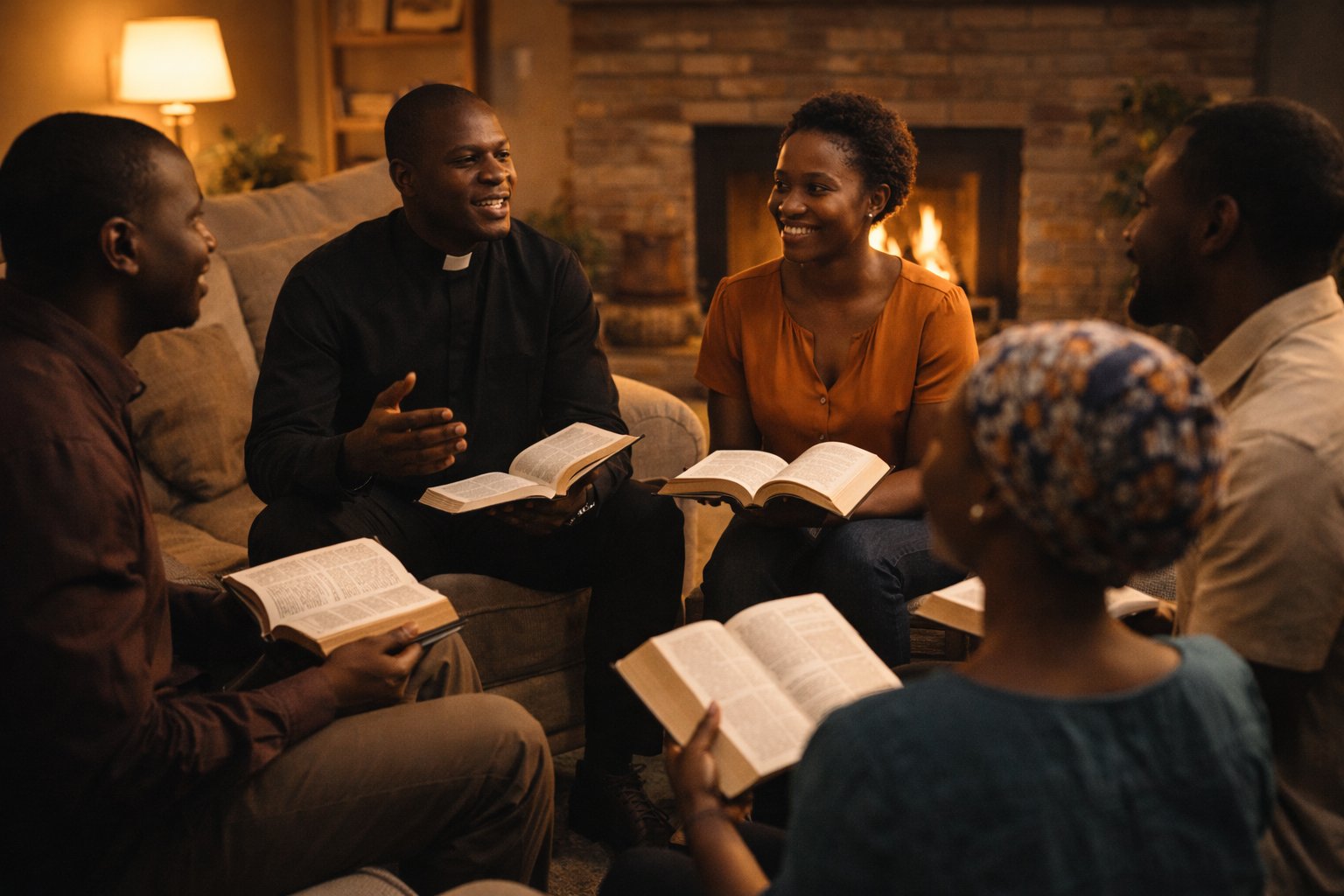
A house fellowship, home cell, or home church is a Christian brand name used to describe a group of Christians who frequently gather for worship in private homes of their members. This group remains an integral part of a larger Christian body, such as a parish, branch, and province within a locality where the church is located. This research highlights the impact of these small groups on the numerical and spiritual development of the larger congregation, specifically focusing on the Mountain of Fire and Miracles Ministries (MFM) as a primary case study.
CHAPTER ONE
1.0. Introduction
A house fellowship, home cell, or home church is a Christian brand name used to describe a group of Christians who frequently gather for worship in private homes of their members. This group remains an integral part of a larger Christian body, such as a parish, branch, and province within a locality where the church is located. However, some independent-minded groups have seen the House Fellowship Centre as the primary form of Christian community.
Sometimes these groups meet because the membership is small, and a home is the most appropriate place to assemble, as in the beginning phase of the British New Church Movement. Sometimes this meeting style is advantageous because the group is a member of a Christian congregation which is otherwise banned from meeting, as was the case in China and other countries centuries ago.
Some recent Christian writers have supported the view that the Christian Church should meet in houses and have based the operation of their communities around multiple small home meetings. Other Christian groups choose to meet in houses when they are in the early phases of church growth because a house is the most affordable option for the small group to meet until the number of people attending the group is sufficient to warrant moving to a commercial location such as a church building. House church organizations claim that this approach is preferable to public meetings in dedicated buildings because it is a more effective way of building community and personal relationships, and it helps the group to engage in outreach more naturally. Some believe small churches were a deliberate apostolic pattern in the first century, and they were intended by Christ.
Modernity has crisscrossed all spheres of spiritual activities to life endeavours enriched by the gospel of Christ. This includes various mediums through which the gospel could be effectively preached. As churches grew in this dimension, different formats on how to develop the gospel or widely propagate the gospel are now being put in place strategically to save lost souls (Olukoya, 2008).
Methods are abound in this regard. Today, the gospel of Christ is preached on electronics and print media, door-to-door evangelism, open-air campaigns, and in public transport systems, including the most formidable medium for preaching Christ through House Fellowship or Home Cells (Calvin Lashway, 2014).
Until A.D. 200, then, a Christian architecture did not and could not exist. Only the State religion erected temples in the tradition of the Greek and Roman architecture. It is important to remember that there is no evidence—biblical, historical, or archaeological—of Christians having special worshiper centres during the first century. Not until the first half of the third century did the Christians build houses of worship (Albert Henry, 1899).
The origin of house fellowship commenced in the mid-30s to the mid-50s A.D., shortly after Peter’s Pentecostal sermon in Acts of the Apostles Chapter 2:41-47 and Acts 5:42 respectively. This situation gave a rebranding of the gospel of Christ where the followers were first called Christian in Antioch in Acts 11:19-26 during Peter’s missionary journey.
A group of small bodies of believers who assembles at a particular location to share the word of God after the main Sabbath service. Today, more and more people from our believers are meeting in private homes each Sabbath for worship. These small groups are referred to by various names such as Home Fellowships, House Churches, and probably the most popular term, The Living Room Church of God or Home Cell. These Christians are often criticized for this practice by some of the leaders and members of religious organizations (Richard Krautheimer, 1975).
1.1. Statement of the Problem
This study intends to highlight salient challenges that have disconnected house fellowship from the mainstream of the church of God in the area of propagating the gospel of Christ and growth. Knowing that house fellowship is a catalyst to church development, we must address why this is not always actualized on the ground.
1.2. Purpose of the Study
The purpose of this study is to examine the impact of House Fellowship vis-a-vis its catalytic role in the growth of Mountain of Fire and Miracles Ministries (MFM), while not undermining scriptural evidence showing that it was a normal New Testament practice for small groups of Christians to assemble in private homes for worship, fellowship, and instruction.
1.3. Significance of Study
The significance of this study is anchored on the following:
- The study will expose various methods to be adopted in making House fellowship efficient;
- The study will open up further areas of concern and principles for church growth;
- The need to appraise house fellowship as the most considerate factor in church growth;
- The study will also elucidate the New Testament stands on House Fellowship.
1.4. Scope of Study
The scope of the study is on how house fellowship can energize church growth with a view to populate the kingdom of God with a desperate intention to depopulate hell, as it has been instructed by Christ.
1.5. Limitation of Study
The scope of this study is as a result of the following limitations:
a) Time
Time is one of the problems encountered in the course of carrying out this study. This study was initiated and concluded within a few weeks, a period short enough to hamper the adequate procurement of relevant data.
b) Lack of Cooperation
Most of the respondents have not been cooperative and compromising to the researcher as they ought to be in facilitating the sourcing of relevant data, and this affected the study in a way. Notwithstanding the above limitations, the texture of this study is not impeded.
1.6. Research Procedures/Questions
This segment of the study examines the method, design, and characteristics of the study population, sampling procedure, determination of the sample size, data collection, and procedure for processing and analysing the collected data. On this research, we relied heavily on content analysis and qualitative secondary sources and interviews as further examined in chapter four.
a. Research Question(s)
In order to effectively answer the research question and present an empirical study, I have formulated a few empirical questions:
- Is house fellowship justified in terms of heavenly readiness?
- Is house fellowship a catalyst for repositioning the church for spiritual and physical growth?
- What role does house fellowship play in ensuring the actualization of kingdom development in Christendom?
b. Research Propositions
To adequately carry out the research work, the following propositions are made:
- House fellowship has not impacted negatively on church growth at large;
- The current strategies employed by church leaders in house fellowship groups have not been effective;
- House fellowship enables leadership mentoring that positively influences church development in determining the following:
- measures taken by the church leaders in promoting personal witness;
- measures taken by the church leaders to improve house fellowship efficiency, ensure spiritual mobilisation of heavenly bound believers;
- growth of any church as body of Christ is dependent on the method of house fellowship adopted;
- challenge to effective house fellowship system of the churches is yet to be countered.
1.7. Definition of the Terms
In this study, readers are likely to come across words with difficult meanings. Hence, the following definition of words:
- Church: The word “church” in the New Testament is always translated from the Greek word ekklesia 1577 “an assembly, a (religious) congregation.” Thus, a church is not a building or a place where Christians met. A church is an assembly or congregation of Christians.
- House Fellowship/Home Cell: House fellowship means being a part of a group; a body of people coming together with a common purpose. It also means sharing things in common such as interest, goals, beliefs, feelings, activities, labour, privileges, and responsibilities. In Christendom, fellowship in Greek means ‘Koinos’ which means ‘Common mutual interest or beliefs’.
- Catalyst: A business dictionary defines a catalyst as a substance that speeds up a chemical reaction but is not consumed by the reaction. In the context of this study, house fellowship becomes an energizer that speeds up church growth through strategic leadership styles.
- MFM: This is an acronym for Mountain of Fire and Miracles Ministries, established in 1989 by D.K. Olukoya as a Pentecostal denomination founded in Yaba, Lagos, Nigeria.
CHAPTER TWO
Literature Review
2.1. Introduction
In this chapter, various literatures on house fellowship will be reviewed with a view to give a proper scholarly approach to this study. Thus, we examined the work of authors such as Allen, R., Blauw, J., Green, M., John Stott, and Daniel K. Olukoya.
With the exception of Green’s Evangelism in the Early Church, the subjects of house fellowship and church growth in the Book of Acts have been unaccountably neglected in recent years. Most home cell ministries have a buy-in approach from a theological perspective in the Book of Acts, building a biblical apologia for the mandate of house fellowship: “House Fellowship as a catalyst to church growth finds its orientation in the Bible. A return to the principles and practices unfolded in the Book of Acts is the only reliable answer.”
2.1.1. Theologians’ Definition of House Fellowship
The value of redaction criticism is that it presents Luke as an author who intentionally arranged his material in a precise order to communicate a specific message, i.e., the evangelistic mandate. German scholars such as M. Debelius, H. Conzelmann, and E. Haenchen first applied redaction criticism to Acts in the 1950s. We must not set accuracy in opposition to intent. Hence, this study literature review will focus on the Apostle Luke’s biblical narrative theory on house fellowship from the book of Acts of the Apostles:
Luke is both historian and theologian. The best term to describe him is “evangelist.” As a theologian, Luke was concerned that his message about Jesus and the early church should be based upon reliable history. Luke’s concern was to communicate the message of salvation through the house fellowship approach (Luke 2:42).
- House fellowship and the resulting church growth are priority concerns to the propagation of the gospel of Christ. The consolidation of salvation can be enforced through house fellowship found in no one other than Jesus (Acts 4:12); and through that medium salvation is offered to everyone who is willing to accept Christ as their personal saviour.
Whereas the Old Testament (OT) depicts “house fellowship” as people coming to God, the Lucan perspective demonstrates that God’s people (and indeed God himself) will seek and will go to the people. A “centripetal missionary consciousness” becomes in Acts a “centrifugal missionary activity.” The great turning point is the Resurrection, after which Jesus gives his people a universal commission to go to the world and make disciples (Blauw, 1974).
Indeed, Luke begins his narrative with an early mention of the ascension. Now, the angels imply, the apostle’s mission is “earthward,” to proclaim this Savior to the world, to go to the world rather than to expect the world to come to them. That is, bringing the gospel to the homes of believers and potential Christians alike. Such is the essence of the entire Book of Acts: outward-moving gospel from house-to-house fellowshipping that results in the growth and development of the body of Christ.
According to Thom Rainer (1990), house fellowship is the communication of the good news of Jesus Christ through verbal proclamation and lifestyle witnesses within a small group of people, with the intent to develop their spirit man and lead the person to salvation in Christ. It is also vitally interested in discipleship. Luke is concerned with the growth of the church that comes from the making of new disciples through house fellowship.
Olukoya (2008), in his book What You Must Know About House Fellowship, defines house fellowship as the bedrock upon which church development is attained both spiritually and physically. He also noted that house fellowship is a spiritual matrix system that trains members for leadership positions. This assertion is in line with the General Overseer of the Redeemed Christian Church of God, Adeboye, E. (2017), who equally posited that house fellowship is the foundation of church growth.
Lee Coe (2014) defined House Fellowship as the concept of the application of God’s Word to our everyday life, giving constant emphasis to Jesus. It allows each person to grow at his or her own pace by applying God’s Word, sharing burdens and joys, and discovering practical truths for personal life. However, Coe noted that some home fellowships overemphasize social responsiveness without Bible study application. Without a steady diet of God’s Word, we become spiritually malnourished.
The President of Christ Embassy, Chris Oyakhilome (2008), noted that the Home Cell System is a special structure within the church that enables spiritual development for soul winning. The cell units are designed to encourage fellowship amongst brethren, necessary for the nurturing of their faith and warfare purposes. Chris has advanced home cells to online meetings, taking the activities of the cell system to the internet to reach out with the gospel (Matthew 24:14).
2.1.3. The Normative Versus the Exception of House Fellowship
Much debate has transpired in recent years over certain events in the Book of Acts. Rather than elucidate the arguments for and against phenomena as being normative for today, it is of greater value to focus on the areas of agreement which were integral to house fellowship as a catalyst for early church growth. These principles are areas that virtually all evangelicals would agree are normative for today.
John Stott (1990) advanced one of the best contemporary commentaries on the Book of Acts regarding House Fellowship groups. In his book, The Spirit, The Church and the World, John Stott addresses most of the issues on the normative and non-normative events in Acts. Stott’s commentary is balanced yet uncompromising in its faithfulness to the text as it regards evangelism as a mission statement for the Christian home cell.
- The Principle of Communism/Prayer in House Fellowship Centres: Scholars on biblical church growth undoubtedly recognize the efficacy and indispensable role of house fellowship and prayer. Apostle Luke would not have us miss the importance of prayer in the growth and expansion of the early church. Stott elucidated that the prayers of the disciples had two characteristics: they persevered and were of one mind. The principle of unified prayer is a thread that runs throughout the Book of Acts.
The power of “agreement prayer” is established when the Sanhedrin threatened the followers. The impulse to share was too great, and a meeting of unified prayer sent the early church to new levels of boldness (Acts 4:31). When Herod plotted to destroy the church through persecution, the church united in fellowship and turned to prayer, which is the only power the powerless possess.
2.2. Church Growth: the Principle of Spiritual Warfare
Olukoya (1999) sees the sustainability of the work of faith embedded in house fellowship, backed up with effectual prayers as the primary weapon for church growth, because the followers knew their battle was “not against flesh and blood but against the spiritual forces of evil.”
According to Teddy Levron (2011), Church Growth can’t be judged by simply counting disciples. Simply counting heads does not tell you anything about spiritual growth. Church growth is a by-product of winning souls and making disciples through house fellowship.
Apostle Luke would have his readers open their spiritual eyes to see the ongoing conflicts between the Holy Spirit and Satan. One such confrontation is stated in Acts 5:3 when Peter accuses Ananias. Stott finds the symbolism of the dragon’s allies in Revelation to correspond to Satan’s three weapons in Acts: persecution, moral compromise, and distraction. Satan first attempts to destroy the church with persecution (Acts 4). The second ploy is to ruin the Christian fellowship with moral compromise (Ananias and Sapphira). The third weapon is the subtle ploy of distraction (Acts 6). At each point when Satan attacks and the church overcomes, a new wave of revival floods the church.
2.2.1 The Principle of God’s Sovereignty in House Fellowship and Church Growth
Despite the abundance of conflicts, Luke communicates clearly that God is the final victor. The martyrdom of Stephen (Acts 7:54-60) did not reduce the church to frightened ineffectiveness; to the contrary, the persecution scattered the church, becoming smaller groups of believers who fellowshipped together proclaiming Christ (Acts 8:4). Stephen’s death led to the beginning of a massive revolutionary movement which spread the gospel across the world.
In his typical pattern of conflict/surprise/victory, Luke relates what seems to be an overwhelming internal problem: deceit within the fellowship. The surprise factor is the death of the perpetrators at the hands of God. The victory is noted in the rapidBelievers’ willingness to learn from the experiences of men of God is as important as any other response. The onus lies on church leaders to exhibit spiritual maturity in prayers before embarking on home cell strategies, to raise future leaders for Christ.
Conclusively, Luke made us understand from the above review that the House Fellowship group is a ministry established by Christ, having its origin from the Bible. Thus, it should be sustained and improved upon for the gospel of salvation.